Monday, nine in the morning. Phone in one hand, Canva open in another tab, and nothing. You can’t think of a single thing to post this week. Before copying what the shop next door just posted or pulling out another generic template, try this: three questions you can answer in 30 seconds, in order, that decide for you.
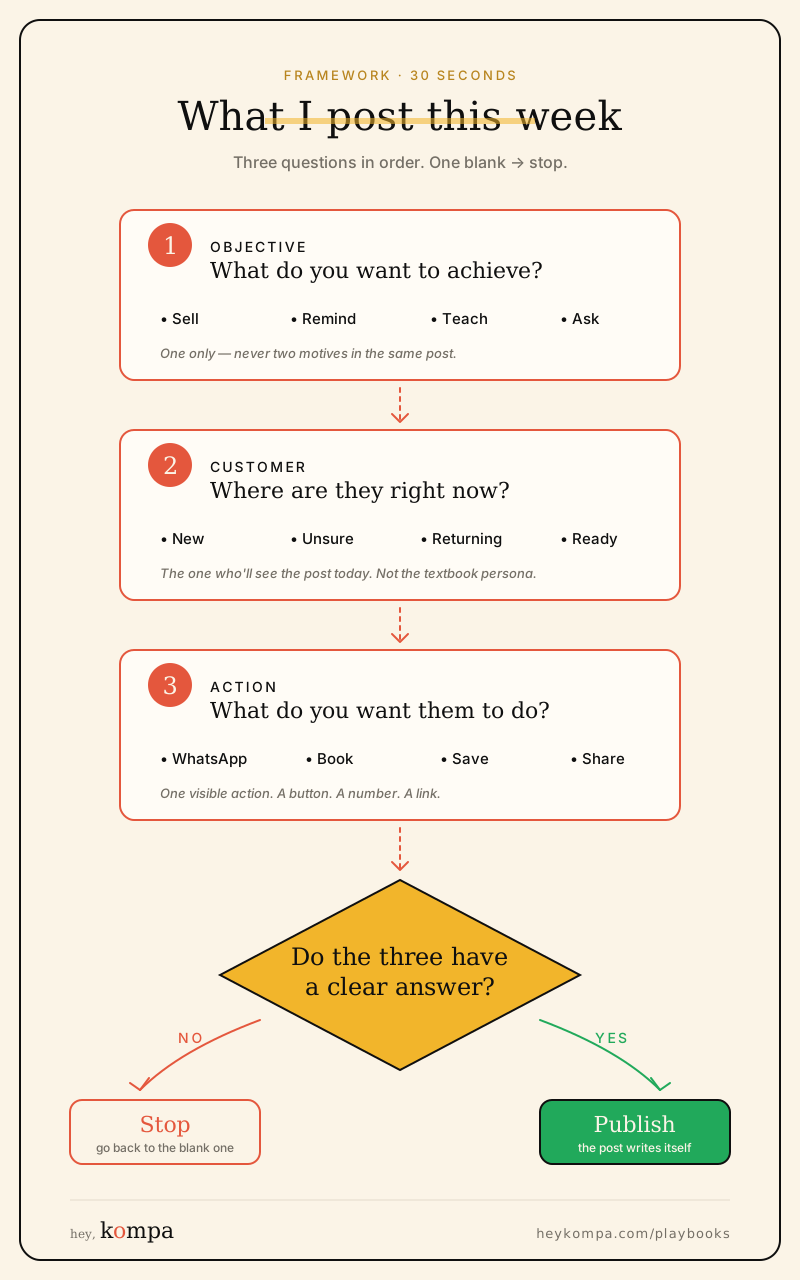
TL;DR — to decide what to post on Instagram this week in a small business, answer three questions in order: (1) what you want to achieve with the post — sell, remind, teach, or ask; (2) what state your customer is in when they see it — new, unsure, returning, or ready; (3) what concrete action you want them to take at the end — message you on WhatsApp, book, save, or share. If all three have a clear answer, you know exactly what to publish, and you publish what your business needs this week — not what came to mind at nine on Sunday night. If one stays blank, that’s not a failure: it’s the signal to stop before spending half an hour in Canva on an idea that wasn’t going to work. The problem isn’t creativity. It’s the decision that comes first.
How a neighbourhood café handles a slow Monday
Small café. One person behind the counter. Mondays barely fill — the coffee is brewed but nobody’s sitting. The owner opens Instagram and stares at the screen. Instead of improvising, she goes to the three questions:
- Objective → sell breakfast on a slow day.
- Customer → lives nearby, knows the café but rarely has breakfast out.
- Action → book a table by WhatsApp.
That’s it. A real photo of the breakfast (not stock), a headline like “Your Monday could start better”, two lines on price and hours, and a big WhatsApp button. Takes less to publish than to brew the coffee. The decision did the work. Design comes after — and it matters least.
Now the three questions, one by one.
1. What do you want to achieve with this post?
Before the headline, the colour, and the photo, comes the motive. You publish for one of these four reasons — there is no fifth:
- Sell something specific this week (a product, a service, a promo).
- Remind regulars you exist when they haven’t been by for a while.
- Teach something useful that you know and people outside don’t.
- Ask for something you need (reviews, quotes, a vote).
One per post. Not two. If you try to sell and teach in the same post, you do neither. And nobody books. Pick one reason and leave the rest for the next post.
2. Where is your customer right now?
Not the textbook persona. The one who’ll see the post today. Four typical states:
| State | What they need to see |
|---|---|
| New — doesn’t know you | What you do, and why you’re different |
| Unsure — walks past without coming in | A specific reason to walk in today |
| Returning — hasn’t been back in months | A reason to return, not a novelty |
| Ready — already wants something | Price and how. Nothing else |
If the motive from question 1 is sell and the customer is new, they’ll most likely scroll past — you need to introduce yourself first. The other way around, six straight posts explaining who you are to returning customers bore them and you lose them. When motive and customer don’t match, you can tell on the first read.
3. What action do you want them to take at the end?
A good post ends with one concrete thing to do. Not with “hope you liked it”. The actions that close best in small businesses are these four:
| Action | When it fits |
|---|---|
| Message you on WhatsApp (with the number visible) | Selling a product, booking, quick questions |
| Book or schedule (direct link) | Services with an agenda — salon, workshop, clinic |
| Save the post | Recipes, prices, templates — things people consult later |
| Share | Only when the content earns it: a giveaway, local news, a useful data point |
If by the end nobody knows what to do, you haven’t published: you’ve decorated the feed.
Don’t close with “hope you liked it”. Close with a visible action. A button. A number. A link.
The same applied to two other businesses
The three questions aren’t only for cafés. Change the sector and the details, the logic stays:
- Hair salon trying to fill Saturday. Objective: cover empty Saturday-afternoon slots. Customer: a returning client who hasn’t been in for a month. Action: book by WhatsApp in one click. Resulting post: a real before/after photo (not stock) + a short message — “time for a new look” — and the direct button.
- Bike workshop at the end of winter. Objective: spring service appointments. Customer: the unsure one — knows the bike needs a check, keeps postponing it. Action: book by WhatsApp. Resulting post: a photo of the workshop with three bikes in service + text “March is the month to service — before the long days arrive” + the phone number.
Order matters: 1 before 2, 2 before 3. Skip question 2 and that’s when generic posts appear.
Three-line recap
- Objective before headline. Customer before design. Action before publishing.
- One per post. Don’t mix two motives in the same publication.
- If one of the three stays blank, don’t publish. Stop.
How do I apply this to the next post?
Pick the idea you had for this week. Don’t keep reading: run it through the three questions in thirty seconds. If it survives, you have Monday’s post. If it doesn’t survive, you’ve saved twenty minutes in Canva and a post that was going to land flat.
The cost of not doing this is known: another week of posts no one saves, another hour on your phone wondering why, and the stronger feeling that Instagram isn’t for you. Two minutes per idea prevent those three things.
Kompa runs these three questions for you before you publish. It shows you the post ready every Monday — you decide if it ships or not. Try it 14 days free.
Try it Monday. Let us know.
Save this: the whole flow in one image
Download PNG
or vector SVG
For PDF, open the image and use Print → Save as PDF.